
Emergency water mitigation for Toronto, where the first hour sets the tone for everything after
A supply line failure or an overwhelmed sump pump doesn't need panic — it needs a clear-headed team that contains the situation and protects the finishes worth protecting.
Email Us for a Free Estimate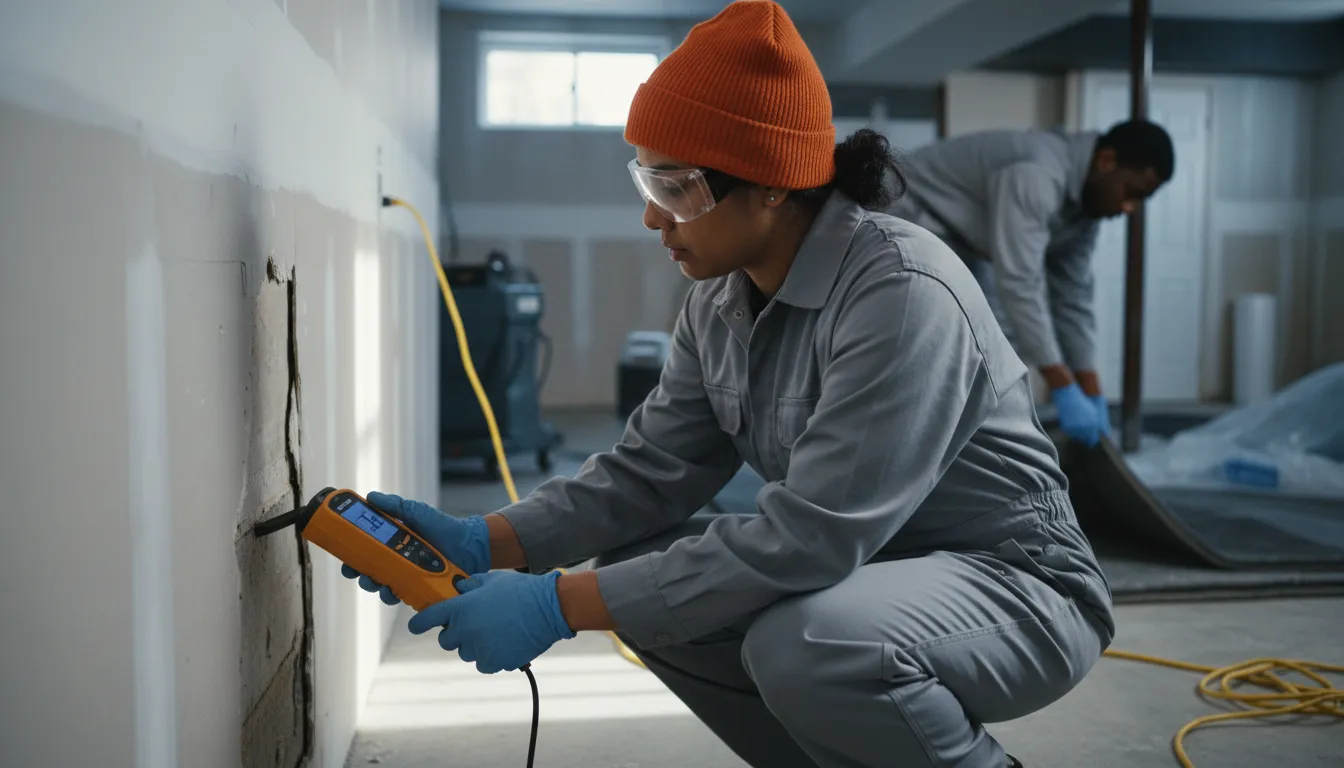
Mitigation is the difference between an inconvenience and a renovation
The word 'emergency' gets overused in this trade. What actually matters in the first hours after a water event is containment discipline — stopping water from reaching materials it hasn't touched yet, and starting extraction before absorption sets in for good.
Containment before extraction
We isolate the affected zone first, particularly important in Toronto's older semi-detached homes where water can travel along shared party walls.
Reading the building, not just the puddle
A finished basement in a North York bungalow behaves very differently under water than an unfinished one in a Scarborough post-war home, and our approach adjusts accordingly.
Protecting what can be saved
Hardwood, cabinetry and trim are often salvageable if mitigation begins early enough — our priority is protecting those finishes, not defaulting to demolition.
Coordinating around condo logistics
In downtown towers, mitigation often means working with building management and shared risers, which we're well practised at navigating calmly.
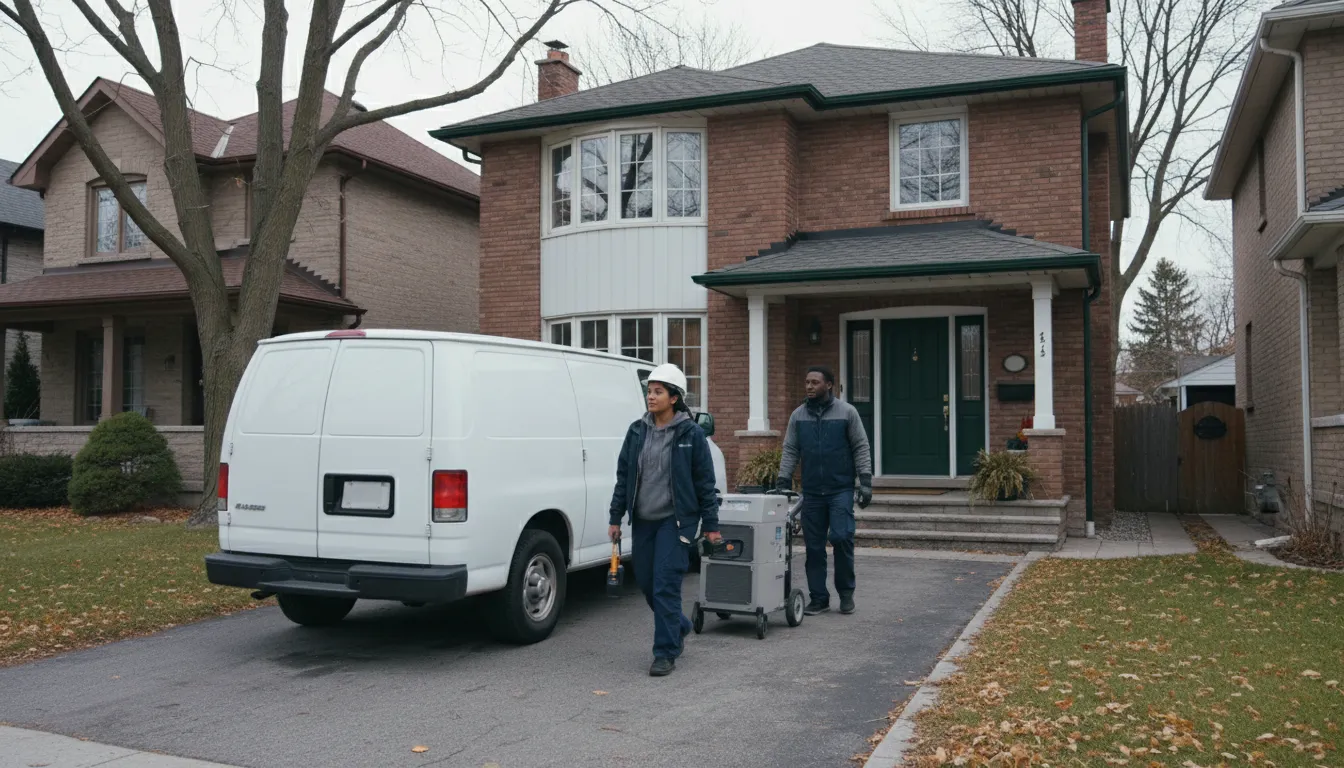
The gap between 'the water stopped' and 'the damage stopped'
Homeowners often assume that once a leak is fixed or a pump is working again, the crisis has passed. In reality, water continues wicking through drywall, subfloor and insulation for hours afterward — a slow, invisible continuation of the same event that started it.
Mitigation that follows the moisture, not the clock
We treat mitigation as an active process that continues until moisture readings confirm the structure has stopped absorbing, using extraction equipment and airflow placement suited to the specific materials in your home — not a one-size approach borrowed from a checklist.
How emergency mitigation unfolds
A calm, sequenced response rather than a scramble.
- 1
Email the details
Send us photos and a short description of what's happening so we can prepare the right equipment before arrival.
- 2
Contain the affected zone
We isolate the area to prevent water from spreading into unaffected rooms or shared structures.
- 3
Extract standing water
High-capacity extraction removes bulk water quickly, reducing the window for absorption.
- 4
Begin structural drying
Airflow and dehumidification start immediately to protect subfloor, framing and finishes.
Why homeowners trust our mitigation response
Composure and craftsmanship matter more than speed for its own sake.
Calm, methodical arrival
No dramatics — just a clear assessment and a plan communicated in plain language.
Prompt email response
We reply quickly to emailed reports so mitigation can begin without delay.
Material-specific care
Hardwood, plaster and masonry are each treated according to how they actually respond to water.
Full-home awareness
We consider how a leak affects the rest of the structure, not just the room it started in.
Considered equipment use
Airflow and dehumidification are sized to the space, not overapplied.
Insurance-fluent reporting
Documentation formatted for a smooth claims conversation.
Emergency mitigation questions
What counts as an emergency water situation?
Anything from a burst supply line to a failed sump pump to sudden basement flooding after a storm. If water is actively spreading, it's worth emailing us right away.
Can mitigation happen before I've spoken to my insurer?
Yes, and it often should. Most policies expect reasonable steps to limit further damage, and our documentation supports that conversation once you do speak with your adjuster.
Will mitigation damage my flooring or walls further?
Our approach is built around protecting materials, not tearing into them unnecessarily. Demolition only happens where it's genuinely required.
How do I reach you in an urgent situation?
Email us with photos and details and we'll respond promptly with next steps — no phone tag required.
Do you handle mitigation for condos as well as houses?
Yes, across Toronto's house and condo stock alike, including coordination with property management where needed.
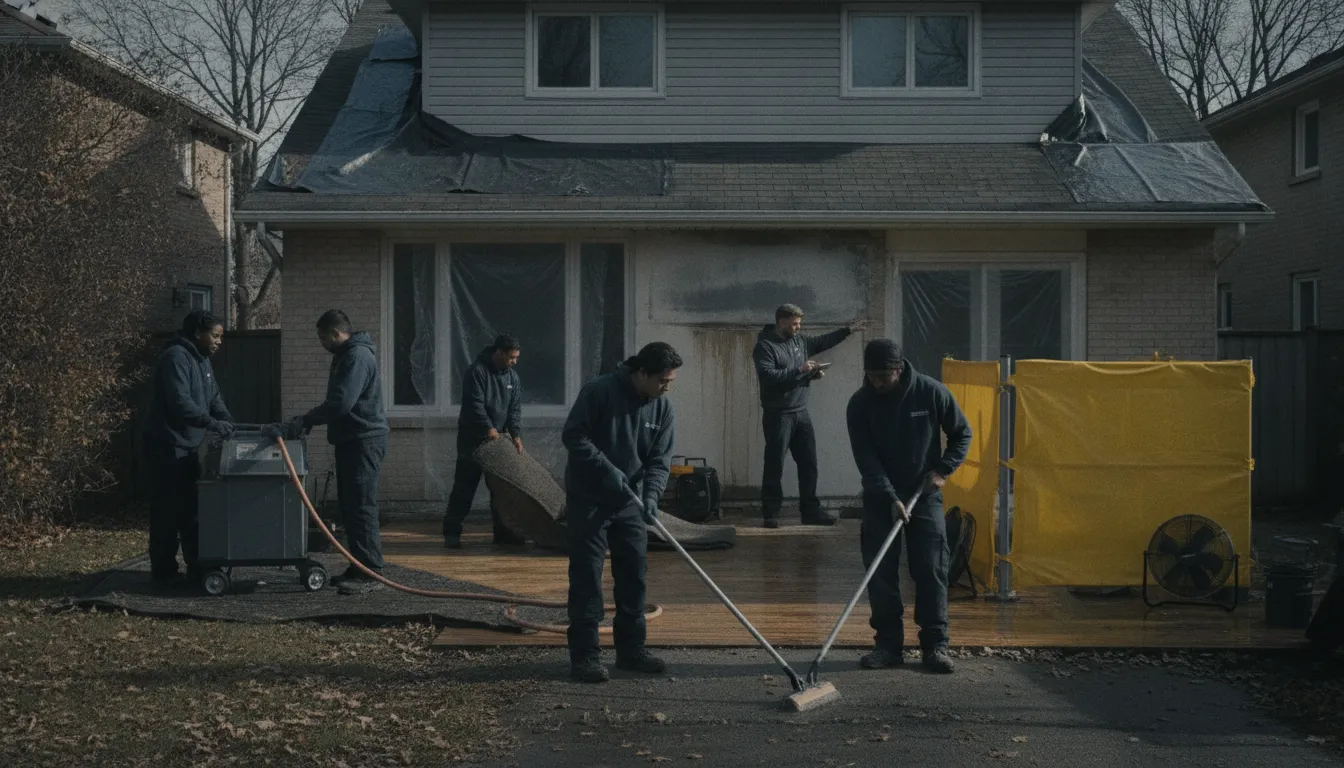
Water is moving through your home right now — let's contain it properly
Email us the details and we'll respond with a clear, calm plan for mitigation.
Email Us for a Free EstimateWeather drives water-damage risk — email us if you find water.
Fall water-damage conditions in Toronto, ON
Fall rain around Toronto, ON tests gutters, sump pumps, and foundations; catching leaks and seepage early prevents the slow water damage and mold that surface over winter.
Proudly Serving Toronto, ON
Local, on-time service throughout Toronto and the surrounding area.