
Storm damage restoration for Toronto homes, after the wind and rain have had their say
Lake Ontario storms move fast and hit hard, and the water they leave behind — through a roof, a window, or a foundation — deserves the same considered restoration as any other water event.
Email Us for a Free Estimate
Lake-effect storms bring a particular kind of water damage
Toronto's proximity to Lake Ontario means storms can intensify quickly and arrive with wind-driven rain that finds entry points a calmer rain never would.
Wind-driven rain forces its way past flashing
Sideways rain during a lake-effect storm can push past roof flashing and window seals that hold up fine under ordinary conditions.
Older roofs in established neighbourhoods show age
Many homes in neighbourhoods like Leaside or the Kingsway have roofing nearing the end of its service life, and a strong storm often finds the weak point first.
Eavestrough overflow during intense downpours
Short, heavy storms can overwhelm eavestroughs faster than they drain, sending water down exterior walls and toward foundations.
Basement window wells under storm surge
A sudden burst of rain can fill window wells before drainage keeps pace, pushing water against basement windows and seals.
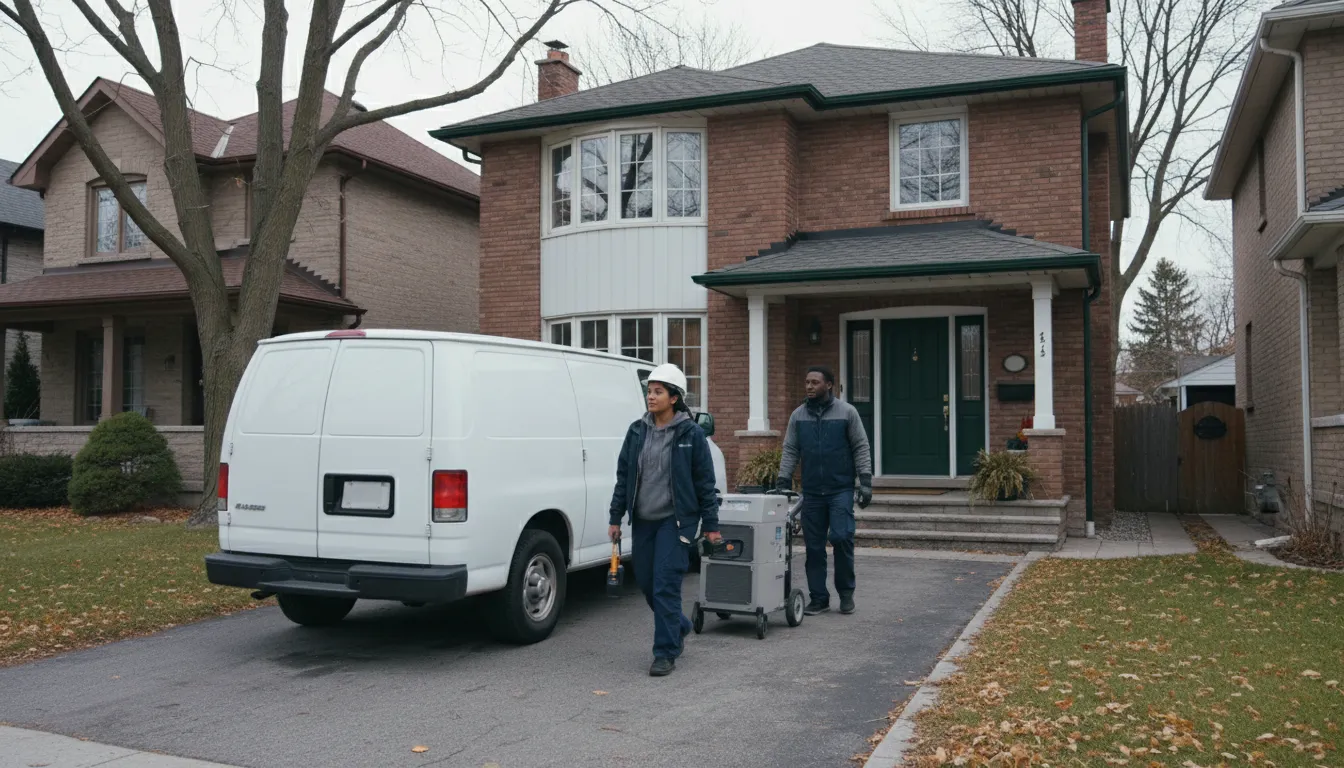
Storm damage is often more extensive than the initial leak suggests
A ceiling stain after a storm frequently represents water that entered through the roof, travelled along framing, and settled somewhere well away from the original point of intrusion — meaning a repair focused only on the visible stain misses where the water actually went.
Restoration that traces the water's actual path
We assess from the point of entry through to wherever water settled, addressing insulation, framing and interior finishes along that whole path rather than patching the ceiling and hoping the rest dries on its own.
Our storm damage restoration process
A sequence built around tracing water, not just patching the obvious spot.
- 1
Assess entry and path
We identify where water entered and how it likely travelled through the structure.
- 2
Extract and contain
Standing water and saturated materials are addressed before further damage accumulates.
- 3
Dry affected framing and finishes
Structural drying continues along the full path water travelled, not just the visible damage.
- 4
Coordinate repairs where needed
We flag any entry points, such as roofing or flashing issues, that need separate repair attention.
Why homeowners call on us after a storm
Storm damage restoration rewards patience and thoroughness over speed alone.
Whole-path tracing
We follow water from entry point to where it settled, not just the visible symptom.
Finish-conscious repairs
Ceilings, trim and plaster are treated with the same care as the structure beneath them.
Prompt email response
Storm damage reports get timely attention, especially during active weather.
Local storm pattern knowledge
Years of GTA storm seasons inform how we assess intrusion points.
Considered drying approach
Equipment sized to the actual affected area, not overapplied.
Clear documentation
Reports built for insurance conversations around storm claims.
Storm damage restoration questions
How do I know if storm damage is affecting more than the visible spot?
Ceiling stains and damp walls after a storm often indicate water travelled further than it appears. A proper assessment traces the path rather than assuming the stain marks the full extent.
Should I address roof repairs before or after restoration?
Restoration typically needs to happen alongside or after the entry point is addressed, since drying a space that's still actively taking on water won't hold. We can advise on sequencing once we've assessed the situation.
Does storm damage restoration cover basement flooding too?
Yes, when the flooding is storm-related, such as window well overflow or grading issues during heavy rain, it falls under this same restoration process.
Will my home insurance cover storm damage restoration?
Most policies include storm-related water damage, and our documentation is prepared to support that claim with your adjuster.
How fast does mould risk develop after storm water intrusion?
It can begin within a couple of days in the right conditions, which is part of why prompt assessment and drying matter after any storm event.
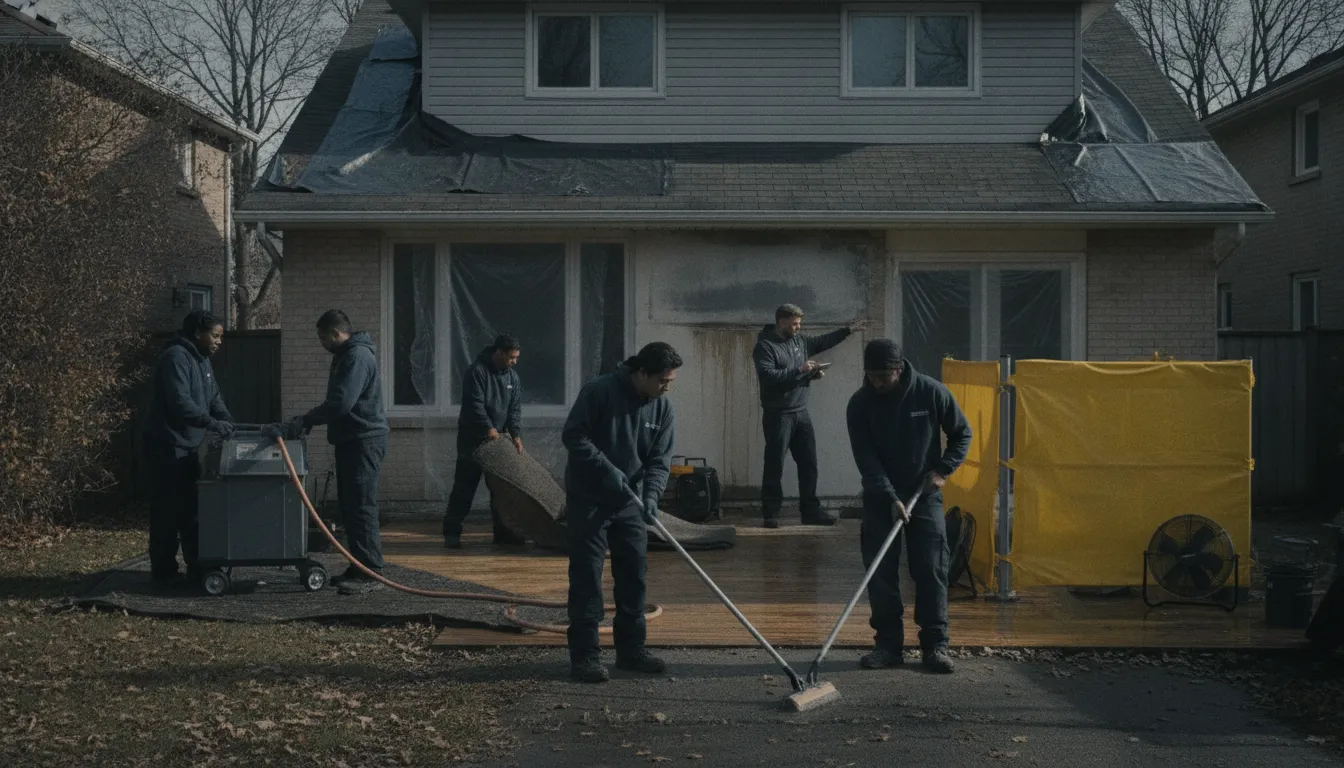
The storm has passed — let's make sure the damage doesn't linger
Email us photos of the affected area and we'll follow up with a clear restoration plan.
Email Us for a Free EstimateWeather drives water-damage risk — email us if you find water.
Fall water-damage conditions in Toronto, ON
Fall rain around Toronto, ON tests gutters, sump pumps, and foundations; catching leaks and seepage early prevents the slow water damage and mold that surface over winter.
Proudly Serving Toronto, ON
Local, on-time service throughout Toronto and the surrounding area.