
Flood cleanup for Toronto homes, from the first inch of standing water onward
Whether it's spring melt pushing through a foundation crack or a summer storm overwhelming the sewers, flood cleanup asks for patience, proper equipment and an eye for what's actually salvageable.
Email Us for a Free Estimate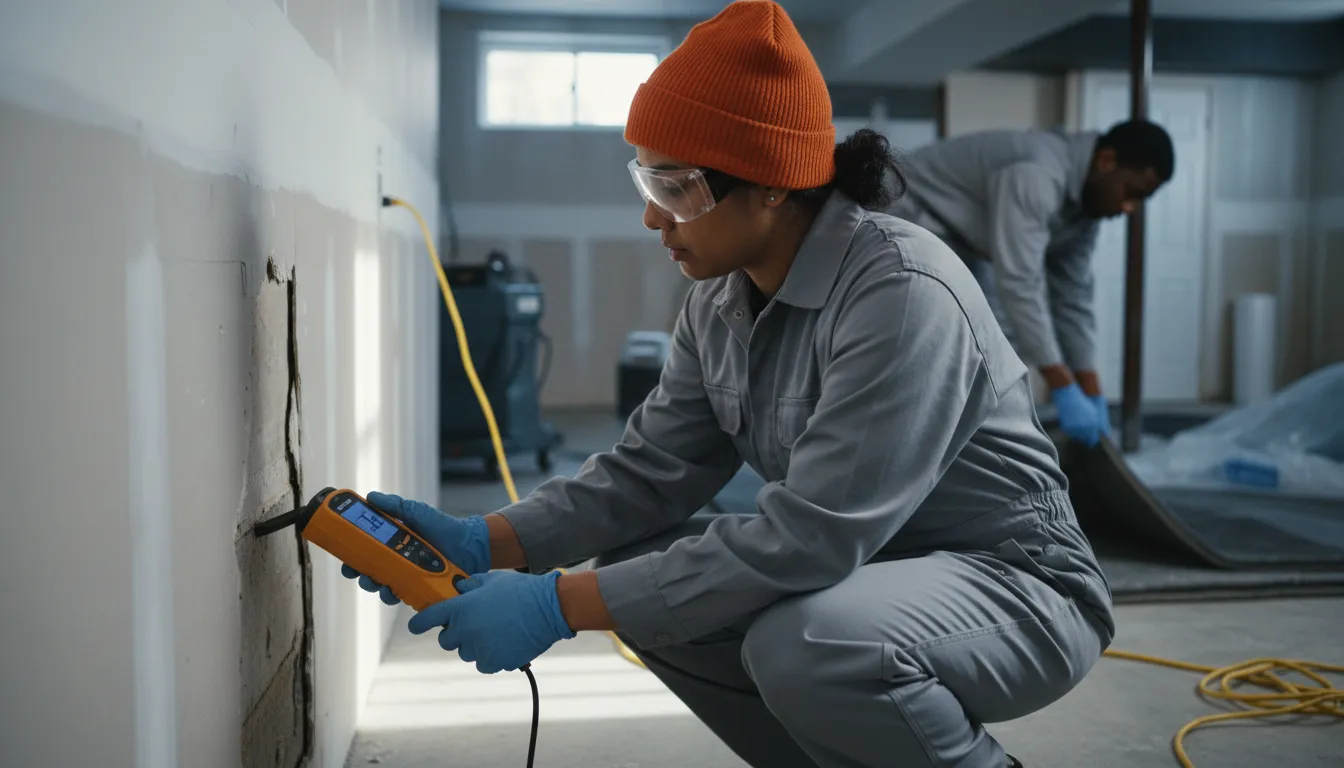
Flooding in Toronto rarely comes from one source
A flooded basement in the GTA can trace back to a dozen different causes, and the cleanup approach genuinely changes depending on which one it is. Understanding the source shapes how we sequence extraction, sanitizing and drying.
Spring meltwater through foundation cracks
As frozen ground thaws unevenly each spring, meltwater often finds its way through hairline foundation cracks that widened over winter's freeze-thaw cycles.
Summer storm surges overwhelming sewers
Intense, short-duration storms rolling off Lake Ontario can overwhelm older combined sewer systems, backing water up into basements faster than it can drain.
Sump pump failure during heavy rain
A pump that's worked quietly for years can fail exactly when it's needed most, during the kind of downpour Toronto sees several times a season.
Window well and grading issues
In older neighbourhoods where grading has settled over decades, window wells can become collection points that funnel rainwater directly against the foundation.
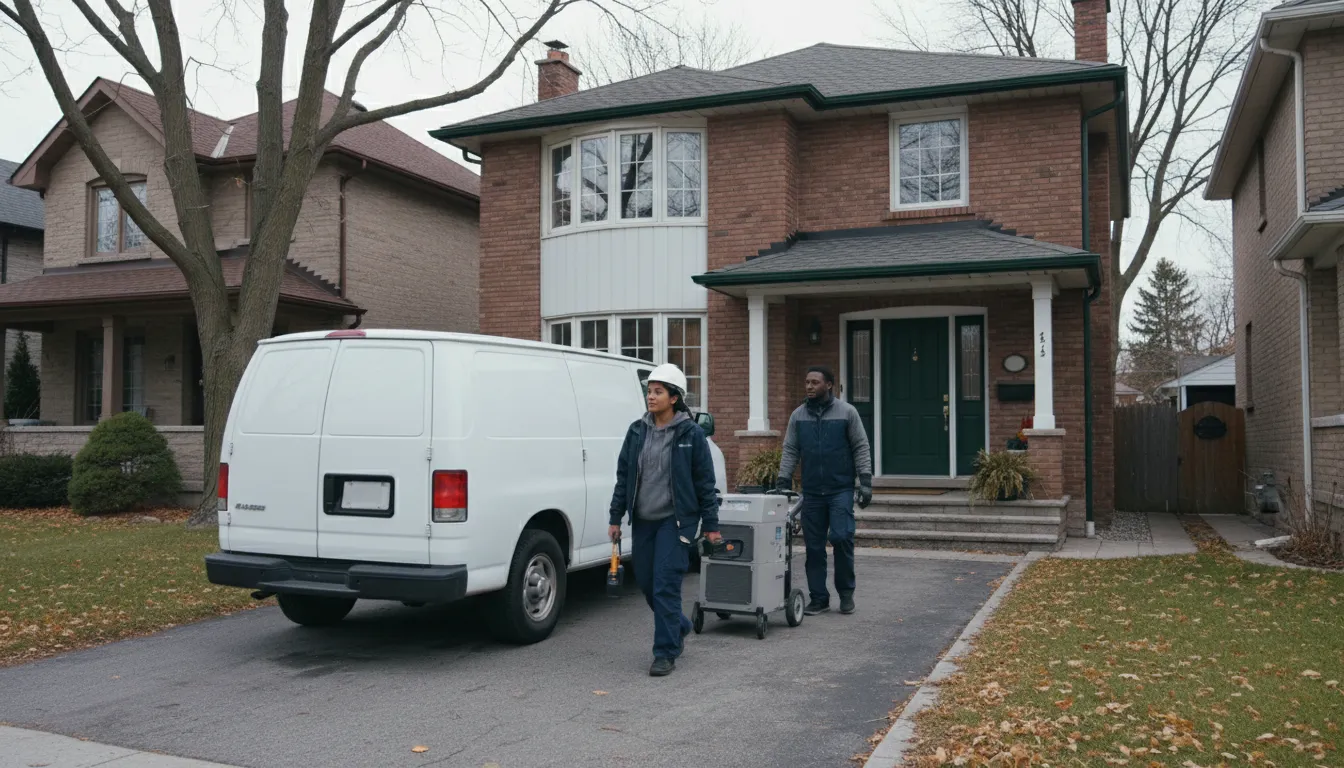
Standing water is only the visible part of the problem
Once water has stood in a finished basement for even a few hours, it's usually carried contaminants into carpet, drywall and stored belongings. Cleanup that only removes the visible water leaves behind the conditions for odour and mould to develop over the following weeks.
A sequence that addresses water, contamination and structure together
We extract standing water, sanitize affected surfaces appropriate to what the water contacted, and then move into structural drying — treating flood cleanup as three connected disciplines rather than a single pass with a wet-vac.
Our flood cleanup sequence
Each stage builds on the last, with drying continuing until moisture readings confirm the job is actually finished.
- 1
Assess and photograph
We document the extent of flooding before any work begins, supporting both our plan and your insurance claim.
- 2
Extract standing water
Pumps and extraction equipment remove bulk water as quickly as the situation allows.
- 3
Sanitize affected materials
Surfaces and materials that contacted floodwater are cleaned appropriately to the level of contamination present.
- 4
Dry to a verified standard
Airflow and dehumidification continue until moisture readings confirm materials are genuinely dry.
- 5
Final walkthrough and report
We review the finished space with you and provide documentation for your records.
What careful flood cleanup looks like
Six habits that separate a proper cleanup from a rushed one.
Source-aware approach
We treat spring meltwater, storm surge and pump failure differently, because they behave differently.
Respect for belongings
Salvageable items are handled thoughtfully, not discarded by default.
Prompt communication
Email responses that keep you informed without needing to chase us for updates.
Whole-basement perspective
We consider finished and unfinished areas together, since water rarely respects that boundary.
Considered sanitizing
Cleaning matched to actual contamination level, not blanket over-treatment.
Verified drying
We confirm dryness with instruments, not assumptions.
Flood cleanup questions
How soon after flooding should cleanup start?
As soon as possible. Standing water in a GTA basement typically begins affecting drywall and flooring within the first day, so earlier cleanup preserves more of what's there.
Will you dispose of flood-damaged belongings?
Only items that genuinely can't be salvaged. We assess before discarding, since many items survive cleaning and drying just fine.
Does flood cleanup include sewage backup?
Sewage-contaminated flooding is handled as its own service with additional precautions — see our sewage cleanup page for that specific process.
Can you work around finished basement renovations?
Yes, and we make a point of protecting drywall, trim and flooring wherever it can reasonably be saved.
How do I document flooding for my insurer?
Photograph what you can safely access, then email us those photos along with a description — we'll build on that with our own documentation.
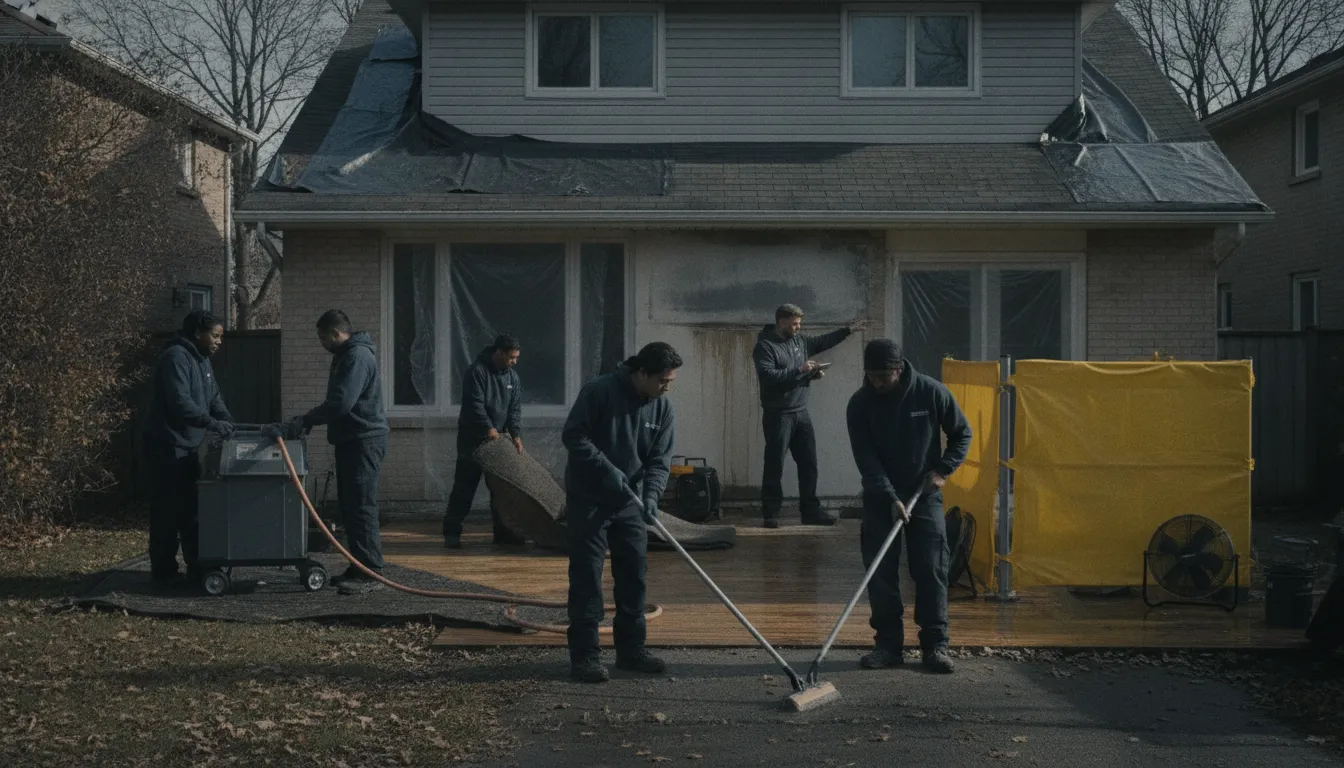
Flooding doesn't wait, and neither should the cleanup
Email us details and photos of the affected area, and we'll follow up with a clear plan and quote.
Email Us for a Free EstimateWeather drives water-damage risk — email us if you find water.
Fall water-damage conditions in Toronto, ON
Fall rain around Toronto, ON tests gutters, sump pumps, and foundations; catching leaks and seepage early prevents the slow water damage and mold that surface over winter.
Proudly Serving Toronto, ON
Local, on-time service throughout Toronto and the surrounding area.