
Structural drying and dehumidification for Toronto homes, engineered rather than eyeballed
A dry-looking surface and a genuinely dry structure are two different things. We bring the airflow science and moisture instruments that tell the difference.
Email Us for a Free Estimate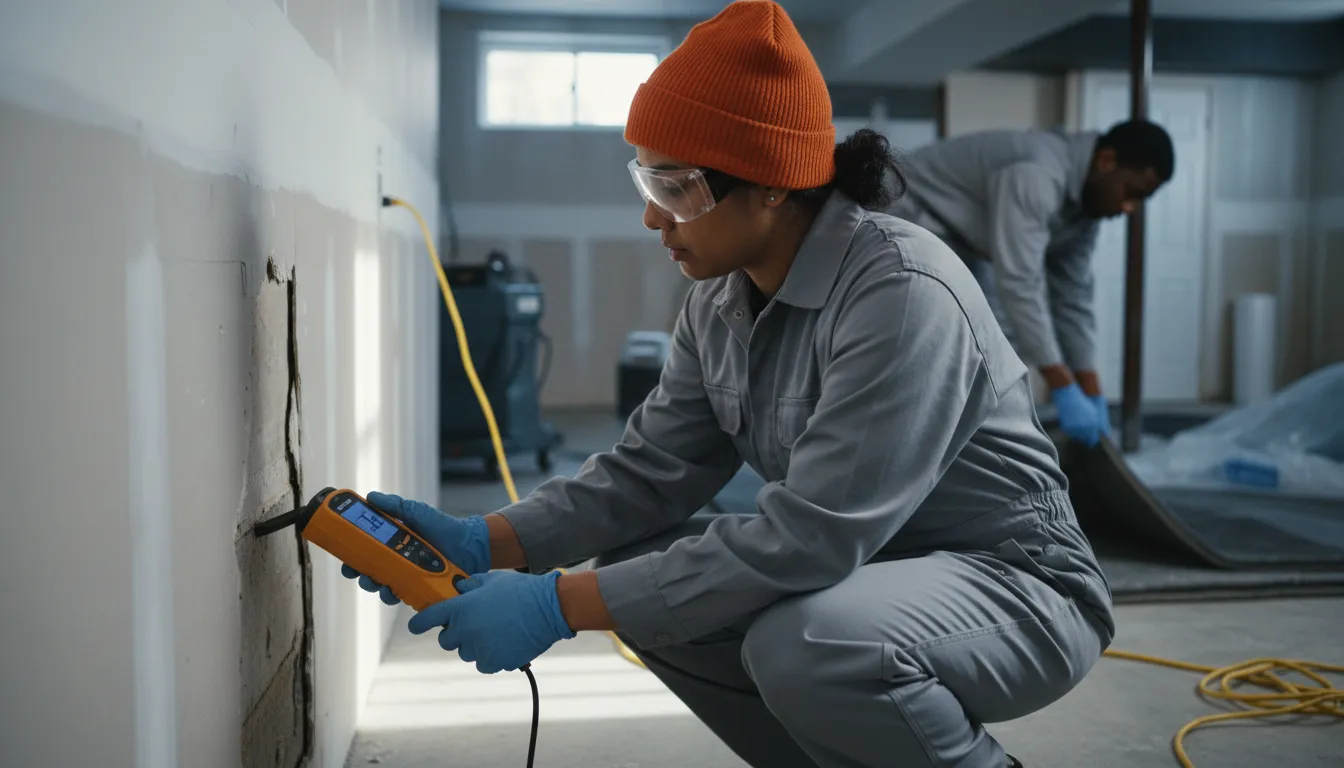
Why structural drying matters more in Toronto's varied housing stock
The materials beneath a Toronto home's surface finishes vary enormously by era and construction type, and each one holds and releases moisture differently.
Plaster and lath in pre-war homes
Century homes across the older parts of the city often still have original plaster and lath construction, which holds moisture differently than modern drywall and needs a gentler, longer drying approach.
Engineered subfloor in newer builds
Newer GTA construction frequently uses engineered wood subfloor, which can swell and delaminate quickly if drying isn't started early enough.
Concrete slab moisture in basements
Basement slabs across the city can hold moisture well below the surface, requiring monitoring over days rather than hours to confirm they've truly dried.
Insulation behind finished basement walls
Finished basements common in post-war Toronto homes often hide insulation that traps moisture against framing long after the visible drywall looks fine.
Surface-dry is not the same as structurally dry
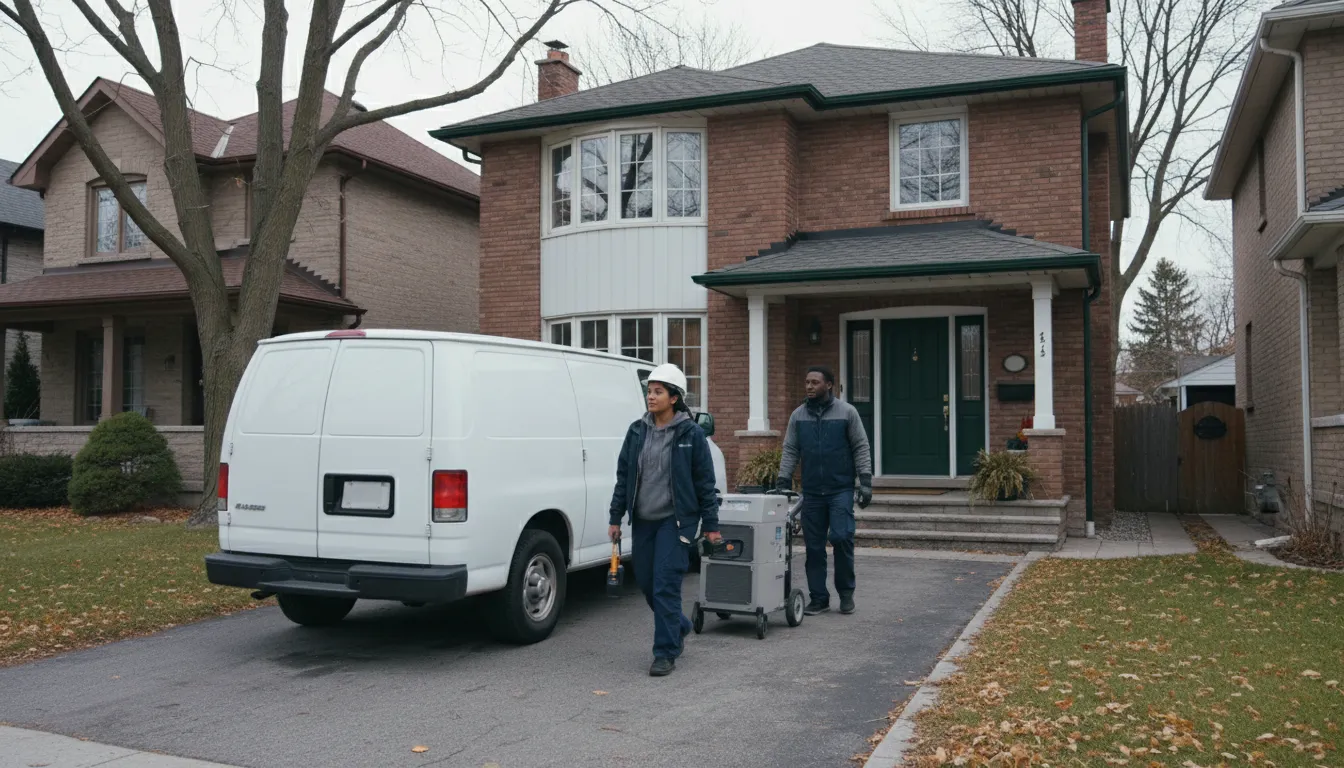
It's common for a homeowner to feel a wall or floor and conclude the water damage has resolved, when moisture is still present well below the surface in framing, subfloor or insulation — exactly the conditions that allow mould and rot to develop quietly over the following weeks.
Drying that continues until the instruments confirm it, not the calendar
We use moisture meters and monitoring throughout the drying process, adjusting airflow and dehumidification as materials respond, and only conclude the job once readings confirm the structure has actually reached a dry standard.
Our structural drying process
A monitored process rather than a set-it-and-leave-it approach.
- 1
Initial moisture mapping
We measure moisture levels throughout the affected structure to establish a clear baseline.
- 2
Engineered airflow setup
Equipment is placed based on how air needs to move through the specific space and materials involved.
- 3
Ongoing monitoring
We track moisture levels throughout the drying period, adjusting equipment as conditions change.
- 4
Verification before completion
Drying concludes only once readings confirm materials have reached an appropriate dry standard.
- 5
Final report
A clear log of moisture readings throughout the process is provided for your records.
Why our drying process holds up
The discipline is in the monitoring, not just the equipment.
Instrument-based verification
We confirm dryness with moisture meters, not visual guesswork.
Material-specific approach
Plaster, engineered subfloor and concrete are each dried according to how they actually behave.
Ongoing monitoring
We track progress throughout the drying period rather than checking once at the end.
Whole-structure awareness
We consider hidden cavities and insulation, not just exposed surfaces.
Efficient equipment use
Airflow and dehumidification sized appropriately to the space.
Clear drying logs
Documentation that shows the drying process, not just the outcome.
Structural drying questions
How long does structural drying typically take?
It varies by material and how much moisture was absorbed — plaster and concrete generally take longer than drywall. We monitor progress and continue until readings confirm the structure is dry, rather than working to a fixed timeline.
Can drying happen without removing drywall or flooring?
Often, yes, particularly when addressed early. The longer moisture sits, though, the more likely some materials will need to be removed to dry the structure properly.
How do you know when a structure is actually dry?
We use moisture meters throughout the process and compare readings against known dry standards for each material, rather than relying on how a surface looks or feels.
Is structural drying necessary after a small leak?
Even small leaks can allow moisture into subfloor or wall cavities, so a quick assessment is worthwhile to confirm whether structural drying is needed.
Do you provide documentation of the drying process for insurance?
Yes, we keep detailed moisture logs throughout the process and provide them as part of our final report.
Don't let 'dry to the touch' be the final word on your home's structure
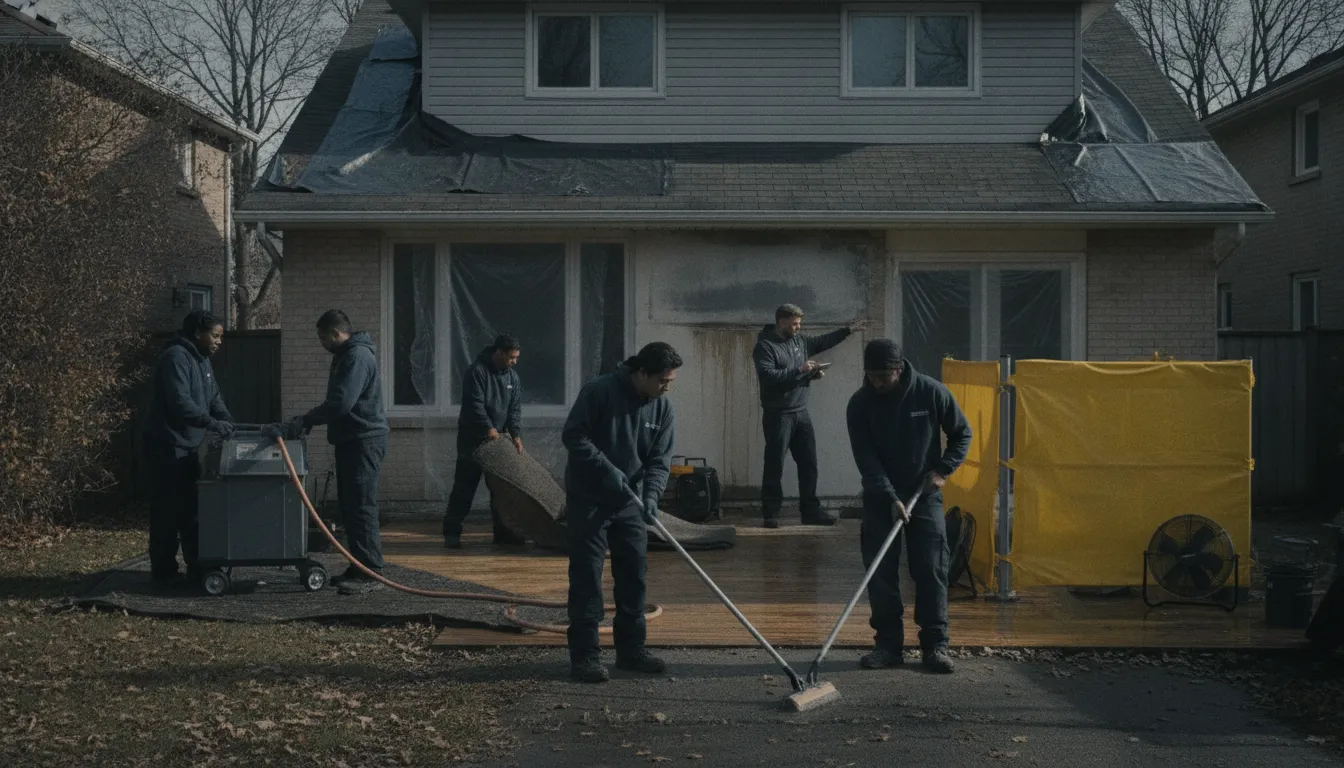
Email us to arrange a moisture assessment and a proper, verified drying plan.
Email Us for a Free EstimateWeather drives water-damage risk — email us if you find water.
Fall water-damage conditions in Toronto, ON
Fall rain around Toronto, ON tests gutters, sump pumps, and foundations; catching leaks and seepage early prevents the slow water damage and mold that surface over winter.
Proudly Serving Toronto, ON
Local, on-time service throughout Toronto and the surrounding area.